What Is Kratom?
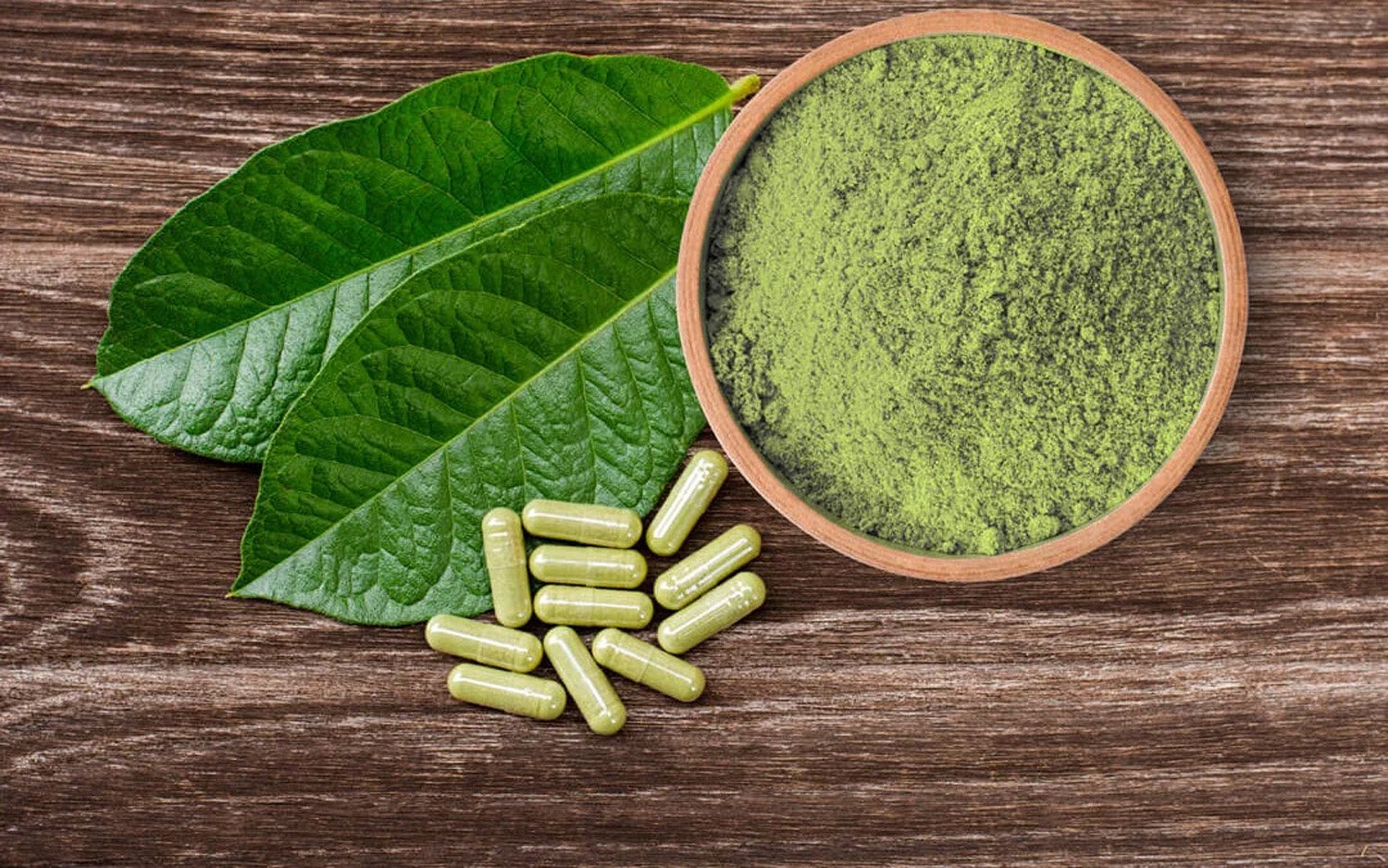
Kratom (Mitragyna speciosa) is a tropical plant in the coffee family, native to tropical regions of Southeast Asia, particularly Thailand and Malaysia.[1] The leaves of the kratom tree contain psychoactive compounds that, at lower doses, can produce both stimulant effects, such as increased energy and alertness, and at higher doses, opioid-like effects, such as sedation, drowsiness, and euphoria.[2]
The dual function of the plant is due to its two primary psychoactive compounds found in its leaves— mitragynine and 7-hydroxymitragynine — which both attach to the brain’s opioid receptors. Mitragynine has a higher concentration and is responsible for the stimulant effects at lower doses.[3] 7-hydroxymitragynine is present in much smaller amounts, but is more potent at the brain’s opioid receptors, which is why larger doses create opioid-like effects and why kratom carries a risk of dependence.[4]
Southeast Asia natives have been chewing kratom leaves or brewing them into tea for hundreds of years to help alleviate pain. Today, however, kratom can be found as powder, capsules, tablets, extracts, and infused into energy drinks in gas stations, smoke shops, CBD shops, and online stores.
Though kratom is sold as a dietary supplement and is not classified as a controlled substance by the federal government, both the Drug Enforcement Administration (DEA) and the Food and Drug Administration (FDA) have raised serious concerns regarding the health risks associated with its use, including issues related to kratom’s potential for addiction.[5]
The FDA has warned the public of the potential dangers associated with kratom and has reported that contaminated kratom products have been linked to the presence of bacteria and chemicals.[6] This has led the DEA to consider kratom for federal scheduling, though as of 2026, no decisions have been made.
As of this writing, kratom is banned state-wide in Alabama, Arkansas, Indiana, Rhode Island, Vermont, and Wisconsin, and locally banned in some cities and counties, such as Sarasota County in Florida.[7] Despite this, kratom remains easily accessible in places where it is legal.
Can You Get Addicted to Kratom?
Yes — kratom addiction does happen, and it happens more often than many kratom users anticipate. Because kratom is legal and marketed as natural, many do not recognize its addictive potential. However, due to the way the active compounds in kratom bind with the brain’s opioid receptors, kratom produces physical dependence similar to traditional opioids. And when a person stops using kratom after a period of regular use, they will experience withdrawal symptoms.[8]
How long it takes for a dependence to develop varies based on how much and how often kratom is used, and individual factors with the person using it, but physical dependence can develop in as little as a few weeks of daily use, with some users reporting dependence even faster due to higher doses or more potent kratom products. Often, kratom users do not recognize the signs of dependence, mistaking them for tolerance, until it is too late.
Signs of Kratom Addiction
Although many people who use kratom do not consider it addictive, due to its legal status and easy availability, addiction does happen. Below are the most common signs:
- Daily or multiple-times-per-day kratom use in order to maintain normal function
- Using higher doses of kratom in order to achieve the same effects, due to tolerance
- Withdrawal symptoms when missing kratom or reducing the dose, including muscle aches, irritability, insomnia, sweating, mood swings, nausea, and compulsive cravings
- Difficulty managing pain, anxiety, or mood without kratom
- Spending substantial amounts of time getting, using, or thinking about kratom
- Continuing to use kratom despite negative impacts on health, finances, relationships, or day-to-day functioning
- Unsuccessful attempts to stop using
- Concealing kratom use from health care providers, friends, or family
- Using kratom to alleviate the symptoms of opioid withdrawal, or using kratom to replace another illicit substance
Since most people using kratom do not associate it with the problems linked to illicit drug use, many fail to recognize that they are addicted and don’t seek treatment, despite exhibiting the warning signs above.
Kratom and Mental Health
The relationship between kratom use and mental health is a recent subject of study. Kratom is frequently used as a form of self-medication for mental health conditions that have not been adequately treated, including:
Depression — Kratom’s mood-elevating effects at low to moderate doses make it appealing to people managing depressive symptoms; the temporary improvement in mood and energy it produces can feel, in the short term, like an effective solution to a condition that has resisted treatment.[9]
Anxiety — At higher doses, kratom’s sedating effects offer temporary relief from anxiety that may never have been properly treated; the relief becomes a reason to continue using even as dependence develops.[10]
Opioid withdrawal and opioid use disorder — A significant proportion of kratom users are managing opioid withdrawal or using kratom as a substitute for opioids; while this use pattern is understandable, it often substitutes one form of opioid dependence for another without addressing the underlying conditions driving opioid use.[11]
Chronic pain — Chronic pain and mental health conditions are deeply interrelated; Alongside the pain itself, many kratom users with chronic pain are simultaneously managing depression, anxiety, or PTSD that has never been treated.[12]
ADHD — Kratom’s stimulant effects at lower doses make it appealing to some people seeking improved focus and energy through non-prescription means.[13]
In each of these cases, kratom is serving a function that should be served by proper mental health treatment. Addressing the kratom use without treating what it was managing leaves the core problem unaddressed.
Addressing the Underlying Causes of Kratom Addiction
A number of people who use kratom began using it because traditional methods of treatment were not working. Their anxiety treatment failed to relieve their anxiety, their depression remained, or their opioid addiction treatment addressed the physical dependency but not the emotional trauma. The fact that kratom was accessible, legal, and provided a temporary solution kept them coming back for more.
When someone is using kratom and getting relief, temporary though it might be, what is likely to happen is that they will eventually either return to kratom or replace it with something else. That is why, at Helios West Palm, we do not focus on kratom as a separate addiction.
We are not a detox or primary substance treatment program. We are a psychiatric treatment program where the underlying mental health symptoms that may contribute to a person’s dependence on kratom are treated as part of an overall treatment plan with a focus on the psychiatric disorder.
Patients coming to Helios West Palm with a known history of kratom use will be provided with a complete psychiatric assessment that looks beyond kratom history to identify other mental health disorders. After the assessment, an individualized treatment plan will be developed that addresses both the underlying psychiatric disorder and the kratom use that has been serving as a stand-in for treating it.
For patients who need detox or medication management for kratom withdrawal prior to treatment, our admissions team can connect them with appropriate providers to facilitate this process.