

If you are interested in what expressive art therapy can do for yourself or someone you love and how it can be incorporated into a comprehensive treatment plan tailored to your unique needs, please reach out to our admissions team. We are available to answer your questions, verify your insurance, and help you determine if Helios West Palm is the right fit for you.
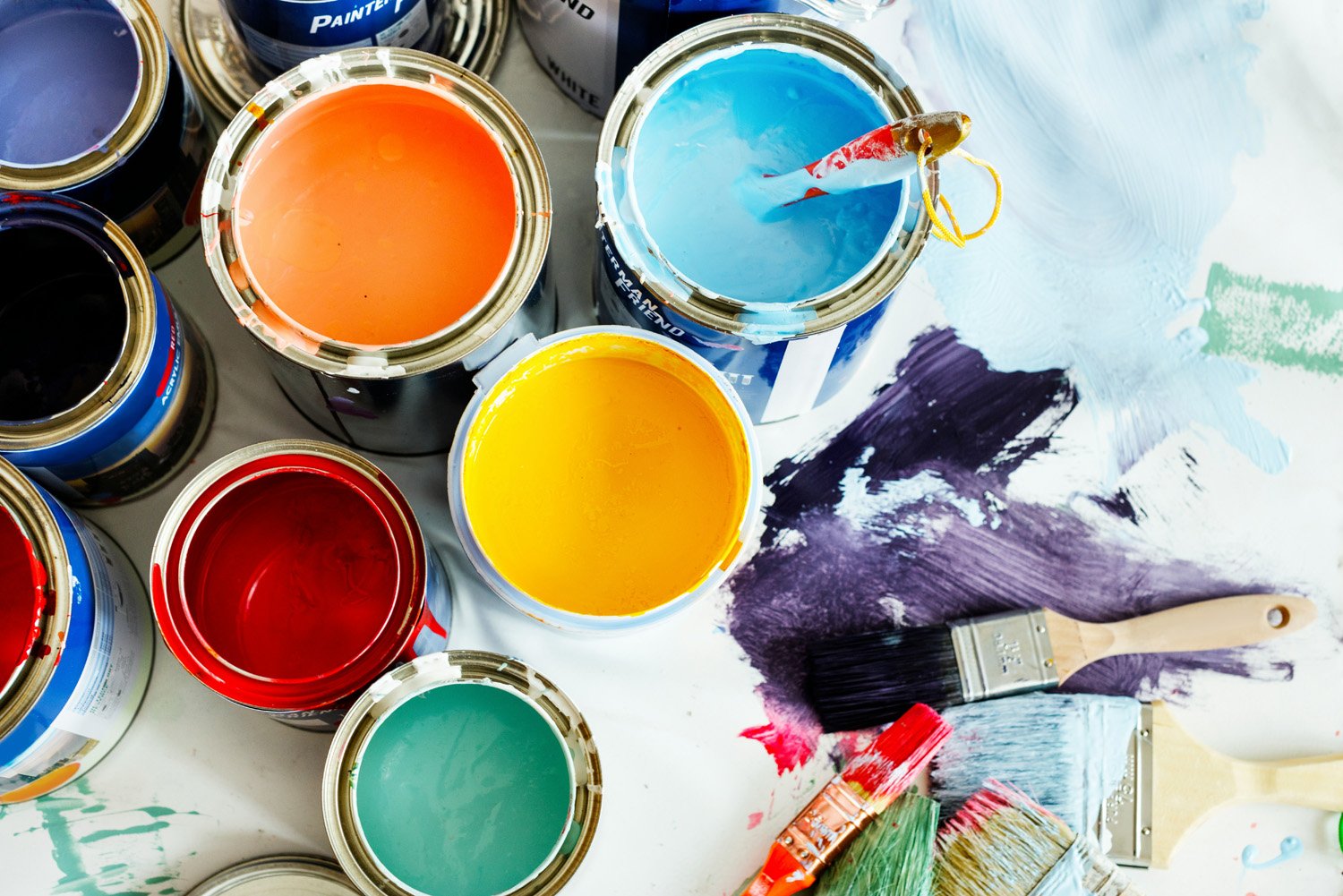
Art Therapy for Depression & Mental Health
Expressive art therapy for adults — healing through the creative process.
Not every experience can be expressed verbally, including trauma, grief, shame, and many other experiences that you may be holding inside. These experiences reside below the level of language, making it difficult to engage with them directly through traditional talk therapy.
That is when other methods of therapy are helpful. Art therapy opens the door for people who want to find a way to express their internal struggles outwardly. Art therapy is about externalizing what is inside, making visible what cannot be seen, and beginning to work with those feelings.
Helios West Palm offers art therapy as a clinically integrated part of our treatment program. It is not arts and crafts — it is an evidence-based, structured form of psychotherapy facilitated by trained, credentialed art therapists. For many patients, art therapy will help them access something that other forms of treatment have been unable to address.
What Is Art Therapy?
Art therapy is a form of expressive arts therapy that uses the creative process of art-making as a therapeutic tool to support mental health and well-being.[1] The American Art Therapy Association (AATA) defines and governs art therapy, and all credentialed art therapists combine their education in psychotherapy with specific training in art forms, creative process, and the implementation of image-based expression for therapeutic purposes.
Art therapy sessions at Helios West Palm are facilitated within our program by trained art therapy professionals. It can be provided in an individual or group format and uses various art techniques and materials, including drawing, painting, collage, sculpture, mandala work, and many other creative activities. The selection of media and techniques varies according to the assessment of each patient’s specific therapy needs and their treatment plan.
The value of an art therapy session lies in the process of creation, not the final product. Patients do not need to be skilled in art-making or have any prior experience to benefit from art therapy — they only need a willingness to participate.
How Art Therapy Works
Art therapy works in several separate but interconnected ways. While engaging in the creative process, patients engage simultaneously in cognitive, emotional, and physical processes. Making art activates distinct neural pathways that are not usually activated through verbal communication alone.[2] Neuroscience evidence supports what art therapists have clinically observed for decades: that making art allows people to express emotions in ways not possible through words alone.[3]
Commonly used techniques and approaches within our art therapy program include:
- Free expression and exploratory art-making — Open-ended creative expression allowing patients the freedom to explore whatever comes up without a predetermined agenda.
- Directed art therapy activities — Specific creative prompts to address particular therapeutic goals, such as exploring identity, processing grief, or identifying and externalizing anxiety.
- Collage and mixed media — Creating meaning using imagery from magazines or other sources, especially useful for patients who feel overwhelmed by starting from scratch.
- Mandala creation — Grounding, self-reflection, and exploration of personal themes using circular, structured art forms.
- Reflective discussion — Following creative expression, patients and therapists review and discuss what was created and how it relates to the patient’s internal experience.
Throughout the art therapy process, art therapists hold a dual role: facilitating the creation of art and providing a clinical framework that allows the artistic process to transform into psychotherapy.
Who Benefits from Art Therapy?
Art therapy research has been conducted across many types of clients and mental health conditions.
It is particularly helpful for:
- Patients with depression, where creative and expressive engagement may reestablish a sense of agency, pleasure, and meaning previously stripped away by mental illness.
- Patients working through trauma and post-traumatic stress disorder (PTSD), where nonverbal expression through art may help access trauma-related material that would be difficult to reach through verbal approaches alone.
- Patients with anxiety, where the focused, sensory experience of making art can provide grounding and help reduce physiological arousal.
- Patients who struggle with self-expression or self-awareness, for whom externalizing inner experience through a visual medium can provide new ways of understanding themselves.
- Patients who have found traditional therapy limiting or who have difficulty connecting verbally with therapeutic interventions.
- Patients with low self-esteem or a diminished sense of identity, for whom creative expression can help rebuild a sense of self
Art therapy is not a substitute for individual therapy or other clinical treatment. Instead, it complements and extends clinical work by reaching areas of experience that support the overall recovery process.
The Efficacy of Art Therapy
The evidence supporting art therapy has grown exponentially in recent years, supporting the use of art therapy as a legitimate form of clinical treatment.
Some notable findings include:
- Systematic reviews of art therapy in peer-reviewed journals show that art therapy reduces the symptoms of depression and enhances quality of life when compared to receiving standard treatment alone.[4]
- Art therapy appears to be effective for reducing PTSD symptom severity, particularly for trauma-related material that is typically difficult to gain access to using verbal approaches alone.[5]
- There is research support for the effectiveness of using art therapy to treat anxiety, with measurable reductions in reported distress and physiological arousal.[6]
- Art therapy has been shown to improve self-esteem, self-awareness, and emotional regulation across diverse populations, including adolescents and adults.[7]
- Studies show that combining art therapy with standard treatment, such as antidepressants and therapy, may enhance treatment benefits rather than simply duplicating them.[8]
- Art therapy has been used as an effective part of substance use treatment by supporting emotional expression, engagement in treatment, and the early recovery process.[9]
At Helios West Palm, art therapy is part of an overall holistic treatment model that is based on scientific evidence and delivered by experienced professionals dedicated to rigorous clinical practice.
What to Expect from Art Therapy at Helios West Palm
Patients who attend their first art therapy session often arrive unsure of what art therapy involves or worried about whether they have enough artistic ability to express themselves.
While art therapy will differ depending on where treatment takes place and who leads it, here is what to expect:
- No artistic skills required — Art therapy is about the process of creating, not the final outcome. You will not be evaluated or judged based on artistic quality.
- A safe, contained environment — Sessions are private and paced according to your comfort level. Nothing will be done that you do not feel comfortable doing.
- Surprising depth — Many patients are caught off guard by how much comes out in an art therapy session and how different it feels from previous forms of therapy.
- Integration with your treatment plan — Insights and materials from art therapy sessions are shared with your treatment team and incorporated into individual and group therapy.
- Variety — Art therapy comes in many forms, and sessions are never repetitive. Your art therapist will adapt their approach and introduce new media and materials as you progress.
Art therapy is particularly meaningful for patients who have engaged in multiple forms of traditional therapy for many years without reaching the underlying cause of their issues.
Art Therapy at Helios West Palm
Helios West Palm is committed to healing the whole person. We understand that recovery from mental illness is about more than clinical treatment. It needs to engage all aspects of a person, not just the presenting symptoms.
At our facility, art therapy is part of a comprehensive treatment approach. Our art therapists are skilled professionals who bring both clinical excellence and genuine creative sensitivity to their practice. They understand that what is created in a session matters far less than what is felt, understood, and integrated through the process, and they treat that process with care and skill.
Contact Us
A Different Approach to Healing
Frequently Asked Questions About Art Therapy
What are some examples of art therapy activities for adults?
Adult art therapy activities include drawing, painting, collage, mandalas, sculpture, mixed media, and directed art exercises centered around therapeutic topics such as identity, grief, anxiety, and trauma. Activities are selected based on each patient’s clinical needs and comfort level.
Is art therapy effective for depression?
Yes. Systematic reviews support art therapy as an evidence-based complementary intervention for depression, demonstrating decreased depressive symptoms and improved quality of life. At Helios West Palm, art therapy is integrated with other treatments, including CBT and medication management, as part of a complete, holistic approach to treating depression.
Do I need to be artistic or creative to benefit from art therapy?
No. You need no prior experience, training, or artistic ability to benefit from art therapy. The therapeutic value comes from the process of creating, not the end product. Your art therapist will provide activities that allow you to engage at your own comfort level, regardless of your artistic background.
How is art therapy different from traditional therapy?
Traditional talk therapy uses verbal communication to process feelings and emotions. Art therapy provides a nonverbal way of expressing and working with thoughts and feelings that may be difficult or impossible to put into words. The two approaches are complementary — at Helios West Palm, art therapy is provided alongside individual therapy and other clinically indicated interventions.
Sources
[1] American Art Therapy Association. (n.d.). About art therapy. arttherapy.org/about-art-therapy/
[2] Quinn, P. (2024). Art therapy’s engagement of brain networks for enduring recovery from addiction. Frontiers in Psychiatry, 15, 1458063. doi.org/10.3389/fpsyt.2024.1458063
[3] [4] [5] [6] [7] [8] Stuckey, H. L., & Nobel, J. (2010). The connection between art, healing, and public health: A review of current literature. American Journal of Public Health, 100(2), 254–263. doi.org/10.2105/AJPH.2008.156497
[9] Holt, E. M., & Kaiser, D. H. (2009). The First Step Series: Art therapy for early substance abuse treatment. The Arts in Psychotherapy, 36(4), 245–250. doi.org/10.1016/j.aip.2009.05.004
